About rifts.to
rifts.to is a live polling tool. Build a survey, put a link or a QR code in front of a room, and watch the answers arrive as people tap them in. Nobody installs an app or makes an account, and that includes you.
It started with a conference talk
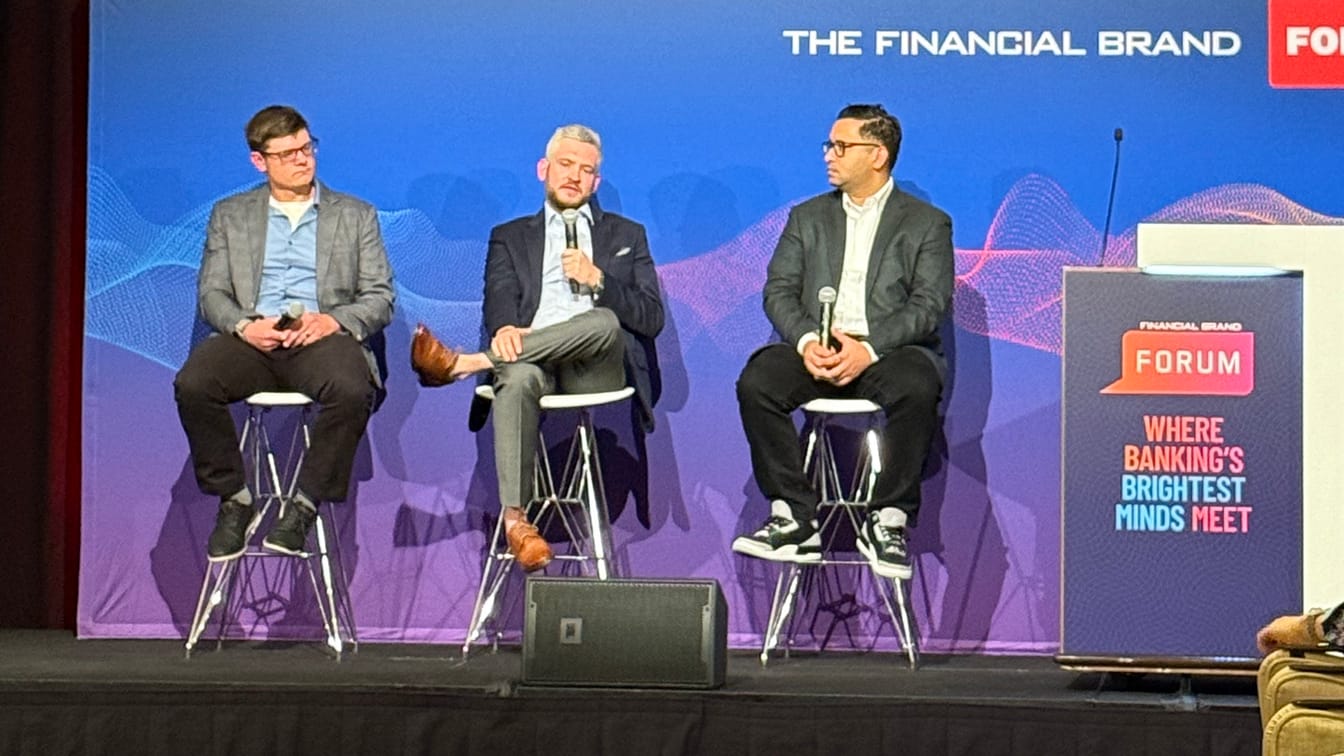
In the spring of 2026, Jeff Whiteside was writing a talk for The Financial Brand Forum on what AI changes for banks, the opportunities as well as the threats. He wanted to ask the room what they actually thought, and put the answers on the screen behind him while he talked.
Every tool he tried wanted something first: an account, a download, a price per participant, a trial with an end date. None of that survives a room full of people holding phones with about thirty seconds of patience. So we built the one we wanted. Quick to make, quick to answer, and no app at either end.
The first survey
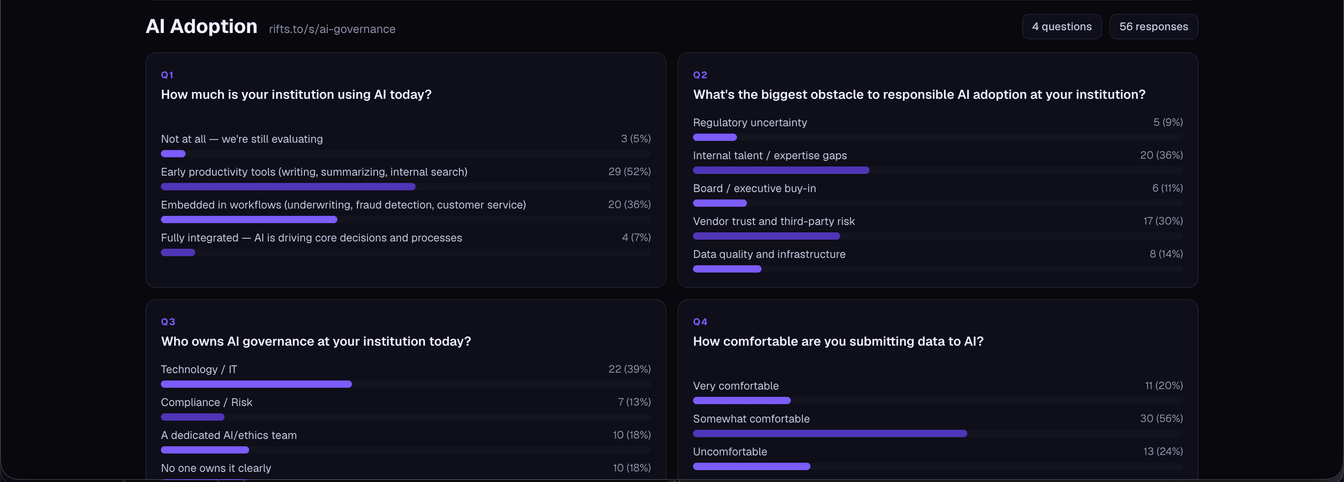
Four questions about AI adoption, 56 answers from the room, and the counts moving on screen as they landed. Everything built since has been in service of that working just as well in someone else's room.
Vibecoded, and open about it
rifts.to is written largely by AI, working from design documents. Each feature starts as a spec committed before any code exists, and 28 of those specs are in the repository. The first version, database and live results and spam protection included, was specified and shipped in a single evening on 28 March 2026.
The pace has been wildly uneven: May 2026 contains exactly one commit, and August contains 354.
What we are careful about
A response row holds the answer, a random identifier and a timestamp. No name, no account, no address, so an answer cannot be walked back to the person who gave it. A test fails the build if anyone adds a column that would change that.
There is a published vulnerability disclosure policy, with safe harbor for anyone researching in good faith, reachable from the footer and from security.txt. Security headers and a content security policy apply to every page, and a captcha guards both creating a survey and answering one.
None of that makes the tool bulletproof. It makes the failure modes ones we have thought about, and it leaves a way to tell us when we are wrong.
How it got here
- 28 March 2026A design spec and an implementation plan, committed before any code. The domain is named on the third line.
- 28 March 2026The first version ships that same evening: database, live results, two word survey links and a captcha, all on Cloudflare.
- April 2026Terms of service, a privacy policy, and the first landing pages and blog posts.
- June 2026German and Spanish translations.
- August 2026Accounts, saved surveys, a paid tier, collaborators, a public API and an MCP server. Spanish is pulled back for a rewrite.
Who builds it
rifts.to is built by Jeff Whiteside. It is a side project, and it is run like one that matters.
